 Saturday, September 20 th : We set out for Philippi by again passing by the White Tower and heading to the
North or was it East.
Saturday, September 20 th : We set out for Philippi by again passing by the White Tower and heading to the
North or was it East.
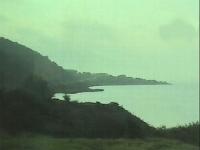
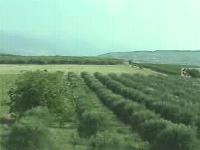 Anyhow, we passed along the shore for awhile then through orchards and along shore again, etc. We thought we saw a lot of grape vines, but later learned that
some of the ones we thought were grapes were actually kiwis. I didn't know kiwi grew like that.
Anyhow, we passed along the shore for awhile then through orchards and along shore again, etc. We thought we saw a lot of grape vines, but later learned that
some of the ones we thought were grapes were actually kiwis. I didn't know kiwi grew like that.
Also could recognize many peach orchards and frequently a field of tobacco. Also saw many flocks of sheep and an occasional herd of goats being tended to along the way.
Aleca filled us in on the history of the town as we approached it. This area was rich in gold and silver and hence was continually subjected to invasions. The town requested
Phillip II for his protection which he granted. Alexander the Great, Phillip's son, used the wealth of this area to finance his armies that conquered the known world.
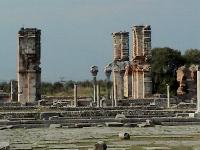
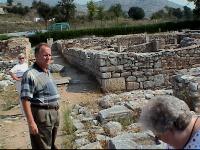
We first visited the area of Philippi that existed in Paul's time. The ruins of the cathedral in this picture is only one of five churches that had been built in Philippi over the centuries. Before we began exploring, Sue Collucci read Acts 16: 16-23 story for this area, and Father Bob elaborated on it. Click Here to download a windows media of the readings.
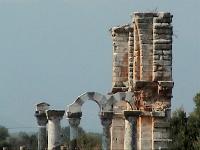
Aleca then led us on a tour of the ancient agora or marketplace. I think she said there were remains from 5 churches on this site. The one we first see here was from around 550 AD.
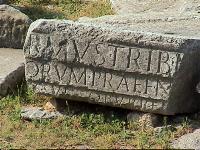
The lower area was strewn with numerous large "rocks", remains from the ancient buildings and streets that have been excavated. Miscellaneous columns projected up here and there and along with ancient streets and foundations. The Via Egnatia off ramp passed through the city and parts of it were still apparent.
We proceeded to the North to the section of the excavation that dated around 200 AD. Here we saw a newly opened part of the excavation that included
a church where you could see a mosaic floor that was later covered with marble slats during a later restoration project. In addition there was a section where a bishops tomb had been
left in place and the church built above and around it.
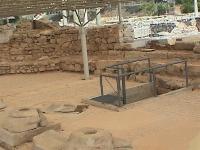
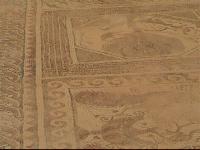
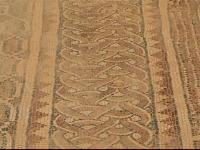
Nearby one could find the remains of storage areas and residences. The bishop's residence was a two story building. A lot of quarters were used for the catecumens who came to Philippi to complete their catechesis. We saw the foundations of what was once a sauna.
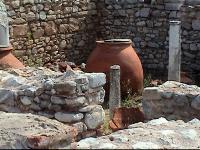
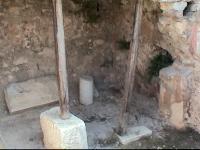
Large bottles for storage of wine could be seen in one storage shed.
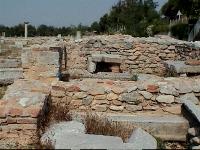
When we turned and headed back towards the entrance we passed by a well preserved public latrine.
We crossed the highway and saw the place where Paul and Silas were imprisoned. John Collucci read the Acts 16; 25-40.
Click Here.
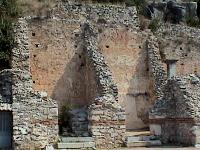
Continuing up the hill we came to the site of a basilica of 500 AD vintage. While in view of the area for the Catecumens, Aleca explained the layout of the church.
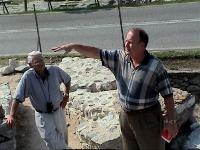
She pointed out that this was a two aisled basilica whereas St. Demetrius was a 5 aisled basilica. She again pointed out the three main sections to a basilica. This one had a double narthex or entrance.
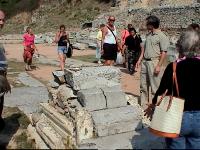
As we headed down the nave, area where the people gathered, she pointed out that the bema (the predecessor of the pulpit) was located in the center of the nave rather than on the side.
Later the bema was moved to the side and finally to a very high point in the church. I think she was saying this bema is the one that Paul used when he preached in the Jewish temple in Veria and it was brought here recently. The foundation for the altar area was evident and she pointed out where the sanctuary was located.